Wispr
Designing the Vision Before the Pivot
Here's the twist up front: the hardware in this case study never shipped. That's exactly why it's one of our favorite stories to tell.
Today, Wispr Flow is one of the most talked-about names in AI — a voice-first productivity tool backed by more than $300 million in funding. But before Flow, Wispr was an early-stage, venture-backed hardware startup with a wild idea: a device worn over the ear that could read silent, mouthed speech and turn it into text. Spanner designed that device — twice, across two connected programs — while Wispr was still building toward its next chapter.
The hardware was eventually shelved. The company pivoted entirely to software, and that pivot is now a well-known chapter of Silicon Valley lore. We're proud of the work regardless — and we think the story behind it, warts and all, says more about how Spanner works than most case studies with a tidier ending.
Who Wispr is today
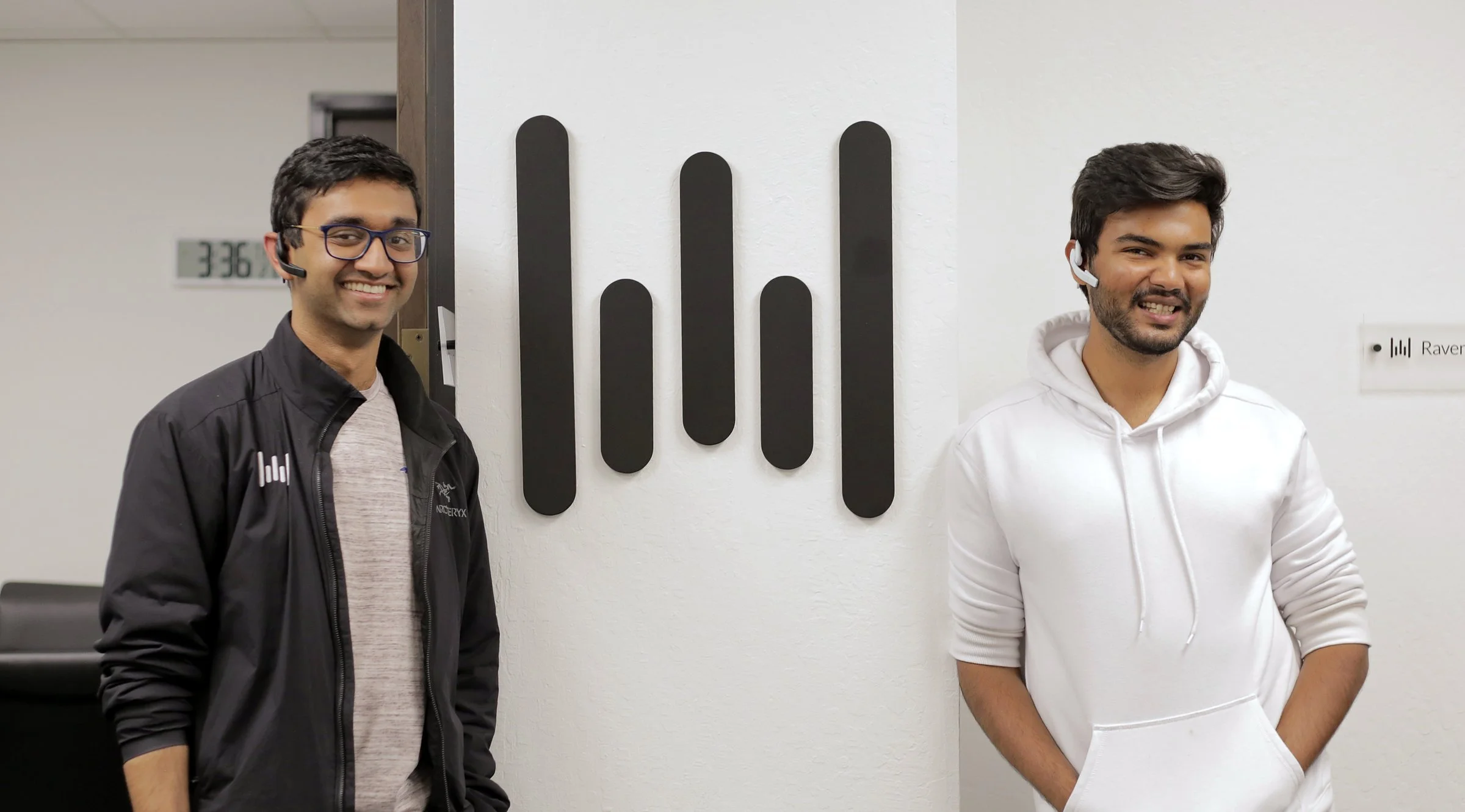
Founded in 2021 by Tanay Kothari and Sahaj Garg, Wispr set out to build a non-invasive wearable that could translate silent speech into text. In 2024, the team made the difficult call to abandon the hardware entirely, after realizing the voice-dictation software layer they'd built to test the device had product-market fit on its own. That product, Wispr Flow, has since raised a $280 million Series B in August 2026 at a $2 billion valuation, and grown into a category-defining voice AI tool, with Tanay's founder journey covered widely as a case study in "humility over conviction."
The ask
In early 2023, Wispr came to Spanner with a founder's brief, not a corporate spec sheet: build a wearable device credible enough to put in front of investors during their Series A. The ask was specific and ambitious — an open-ear, single-boom device with a rotating arm reaching toward the cheek, Apple-quality polish, fitting the 5th to 95th percentile of users, comfortable enough to wear for a demo. Wispr needed renders for the pitch deck and a working, wearable prototype investors could pick up and try on in person.
This was Spanner's first engagement with Wispr — what became Wispr Air.
Design updates
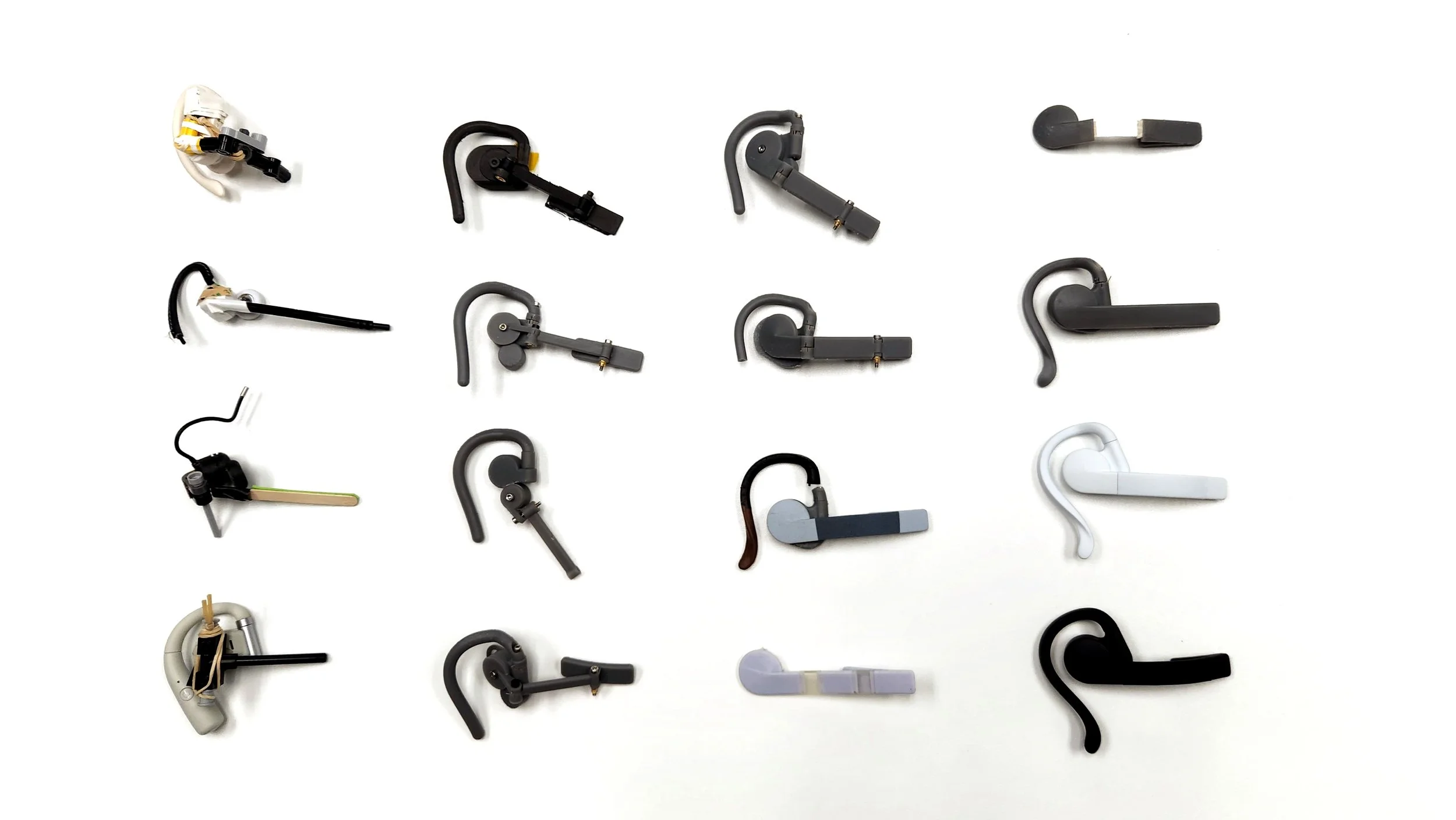
We approached Air the way we'd approach a production program, even though the end goal was an investor demo, not a manufacturing line. That meant establishing a real PRD, a system architecture, and volumetrics before a single concept sketch — because a device that looks confident to an investor only works if the ergonomics genuinely hold up under real testing.
And we tested for real. The team 3D-printed Tanay's own ear to use as a fit reference throughout development — the "golden ear" every iteration had to work against. Fit validation included asking Wispr's team to hold extended vowel sounds ("oooo," "eeee") to test the arm's contact against the widest range of natural cheek movement, and iterating physical prototypes through a range of boom-arm durometers — from 10A to 60A — to land on the right balance of hold and comfort.
Partway through, testing surfaced a real problem: the fit "still doesn't work well" for every face shape, and the team made the call to simplify — reducing the design from two cheek booms down to one. It's the kind of pivot that's easy to forget happened once a final render looks clean, but it's a genuine example of design responding to what testing actually shows, not what a sketch promised.
From Air to Pro
Air's reception internally at Wispr was strong enough that the founders asked Spanner to stay on for two additional directions before Air had even wrapped: a full headset version (Wispr Pro) and an industrial variant. Pro moved forward first — a two-boom headset that carried Air's design language into a more substantial, over-ear form factor.
Partway through Pro, Wispr's team asked for something rarer: a full design overhaul, mid-program, even after the initial surfacing was already complete. Rather than treat that as scope creep, Spanner restructured the remaining program around it — down-selecting new concepts, rebuilding CAD, and carrying the redesign through to final, photorealistic renders. It's a genuine example of staying flexible for an early-stage client whose own product thinking was evolving in real time, which is exactly the environment most startup hardware work happens in.
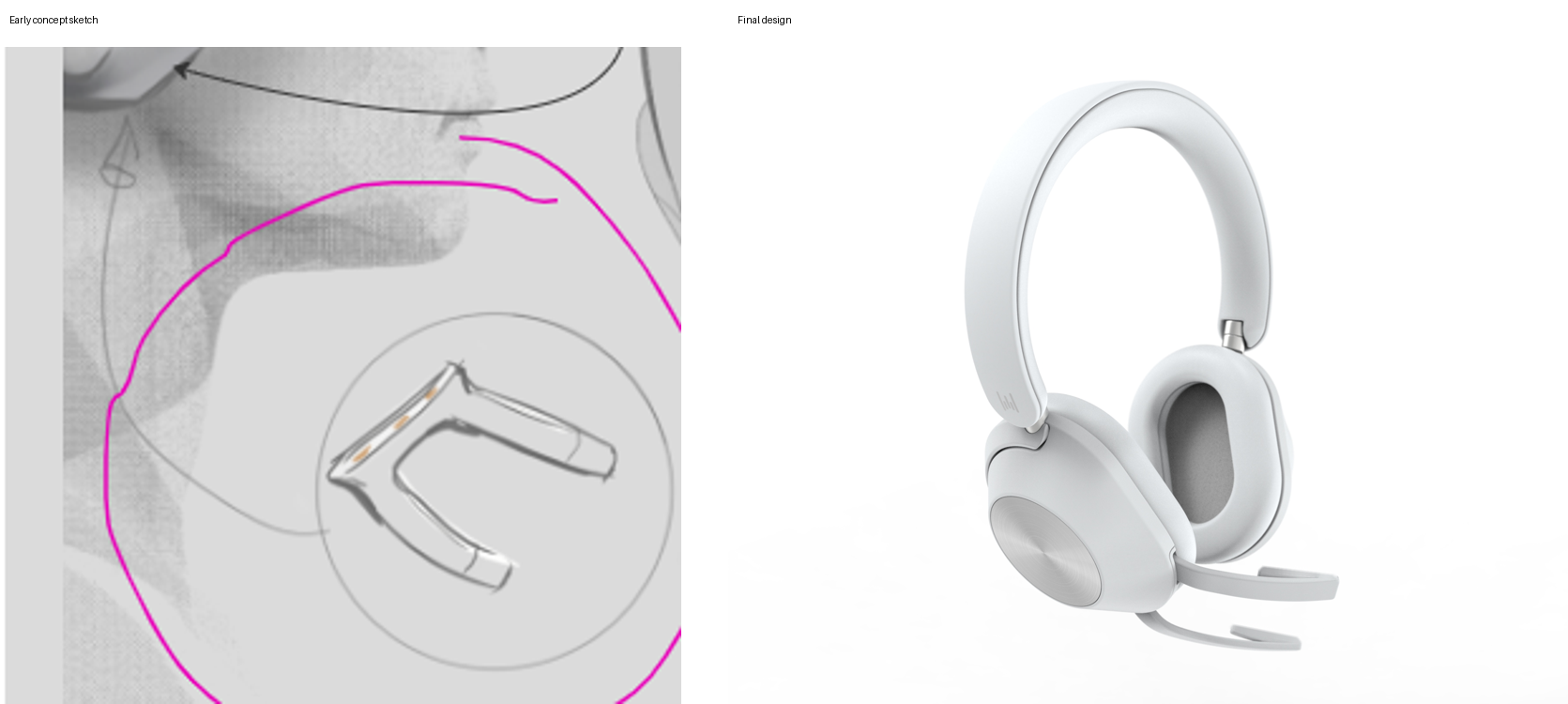
"I like the removable concept and stowing it when not needed." — Tanay Kothari
Engineering solutions
Ergonomic validation, built around a real reference. The 3D-printed "golden ear" model and vowel-sound testing gave the team a repeatable way to check fit against natural facial movement, not just a static mockup
Iterative durometer testing. Physical boom-arm prototypes were built across a 10A–60A hardness range and tested with a manufacturing partner to find the right comfort-to-hold balance before committing to a final material spec
A responsive pivot from two cheek booms to one, made after real-world fit testing showed the original two-boom design didn't hold up across different face shapes — a case where the design changed because the evidence said to, not because of a stylistic preference
Rotational tolerancing (GD&T) on the arm pivot. The team added positional tolerancing to the arm pivot to ensure the final design was manufacturable, not just CAD-clean
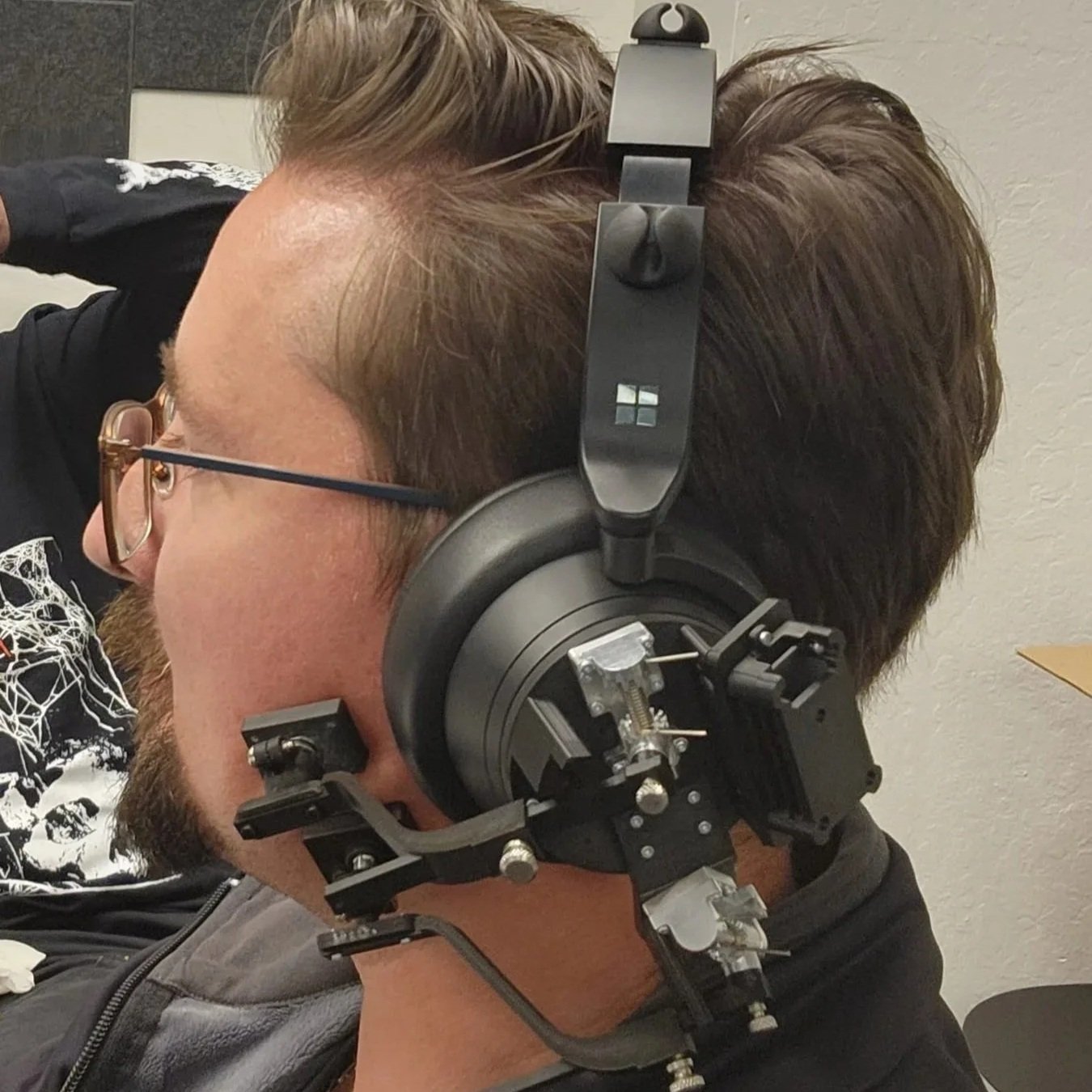
Spanner ID lead David Bogdal fit-testing an early Pro prototype.
Prototyping & fabrication
Because both programs were building investor-facing demo hardware rather than production-line devices, Spanner's manufacturing role looked different than a typical case study — sourcing and managing prototype vendors (including RFQs across multiple shops), coordinating durometer and CMF sample runs, and delivering appearance models that were functional enough to demo but built for credibility, not mass production. Even at that lighter scale, the same rigor applied: real vendor sourcing, real tolerancing, real fit validation — because an investor picking up a flimsy prototype is a worse outcome than no prototype at all.
Program outcomes
Delivered final Wispr Air appearance models and a complete CAD database, on a program built for Series A fundraising
Delivered Wispr Pro concept renders, followed by a full mid-program redesign to a second, final direction
Ran real ergonomic testing (custom ear reference model, vowel-based fit testing) and iterative comfort validation across multiple prototype rounds
Sourced and managed multiple prototype vendors across both programs
“When we started with Spanner in early 2023, Air and Pro were sensors and Lego contraptions on a lab bench. The question was how to turn that into something a normal person would want to wear all day — how it charges, how it sits on your ear, whether you could throw it in a backpack without thinking about it. Spanner took that on, and finding the balance between what our neuroscience made possible and what a real product needed is what made the devices feel real.”
Project team
Wispr: Tanay Kothari, Sahaj Garg
Spanner: David Bogdal, Bethany Valderrama, Sam Lowe, Alyssa Kinoshita, Arne Lang-Ree, Torence Lu
What happened next
In 2024, Wispr made the call to leave hardware behind entirely. The software layer built to test and demo the device — voice dictation — turned out to be the real product. Rebranded as Wispr Flow, it has since grown into one of the most recognized names in voice-first AI, with Tanay candid in interviews that the pivot was "a lesson in humility over conviction."
We never got to see Air or Pro reach a store shelf. But we got to help two first-time founders look credible enough, early enough, to keep building toward whatever came next — and what came next turned out to be something much bigger than either of us expected at the time.
Have a startup that needs to look investor-ready?
More of Our Work