Skylight Calendar 2
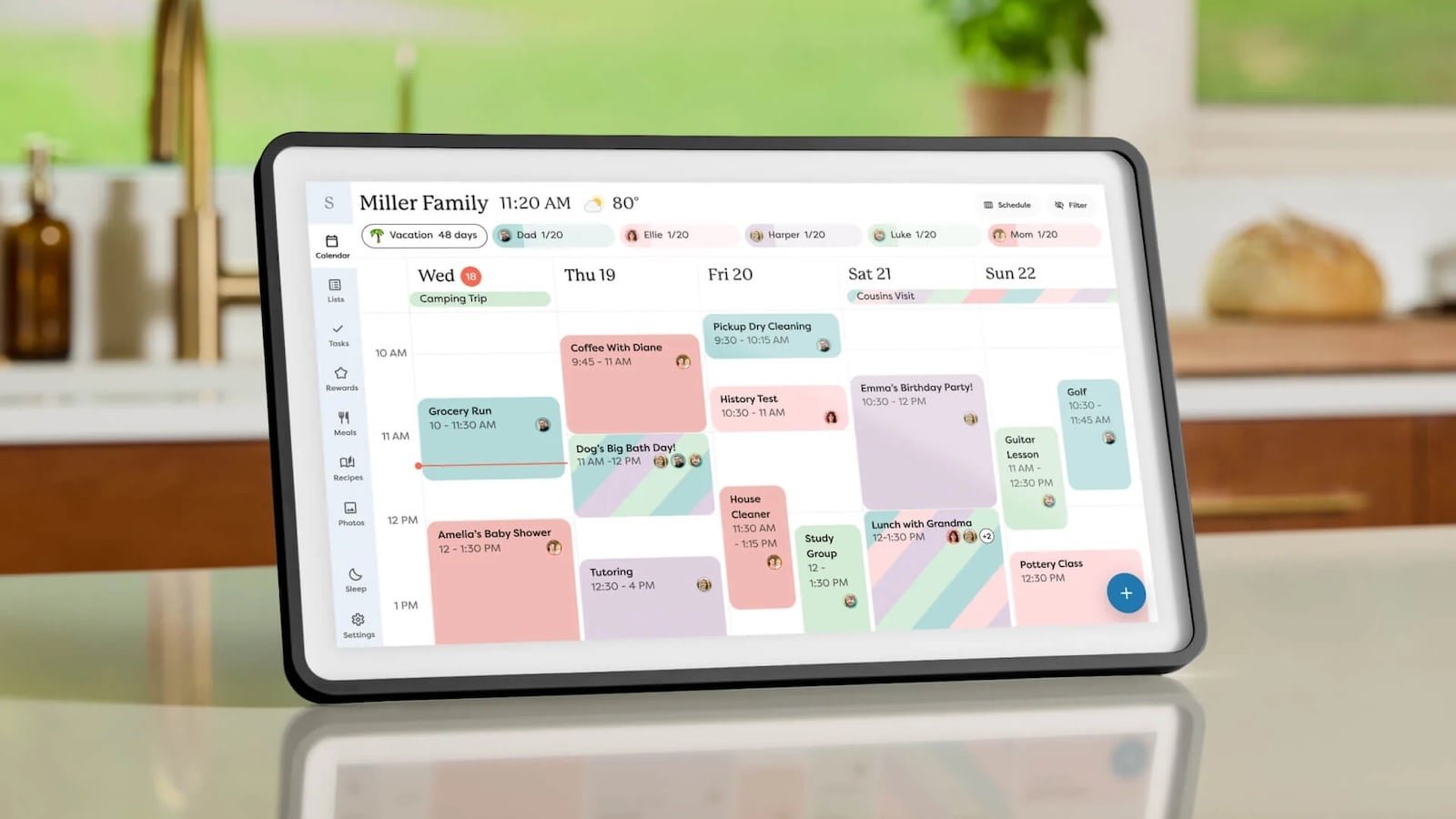
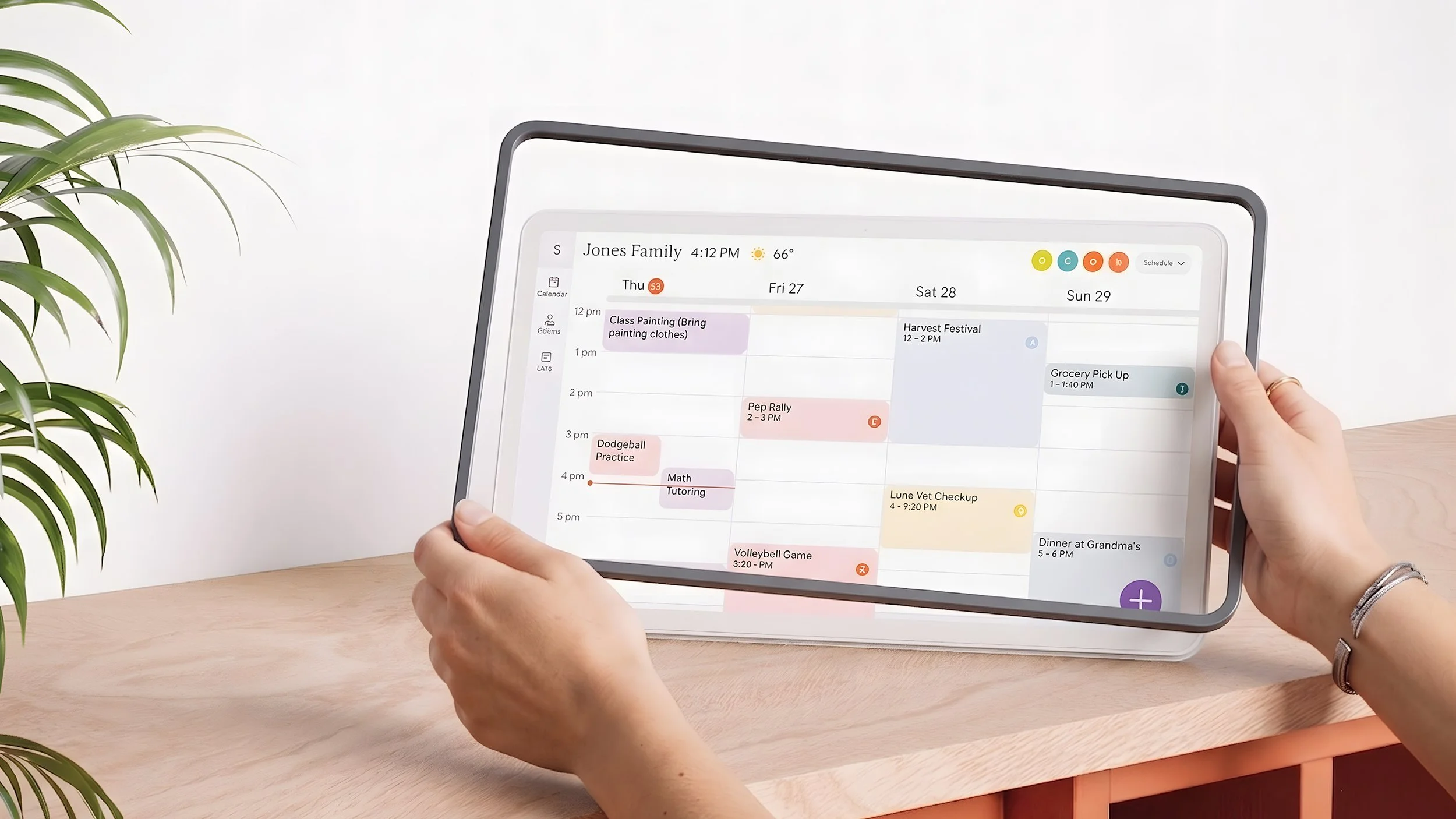
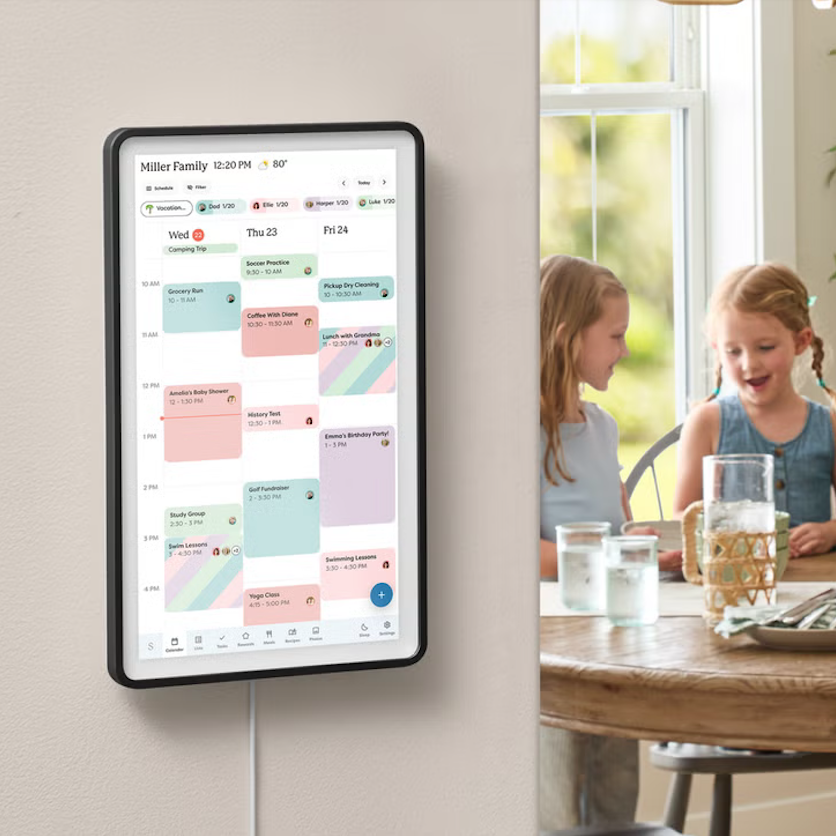
Skylight's 15" Calendar has been a mainstay of the family-organization category for years. When Skylight set out to bring it into the same family as its larger 27" Calendar Max, they needed more than a cosmetic refresh — they needed a smaller device to do everything the bigger one did, without the bulk.
Skylight partnered with Spanner and n-others to redesign the 15" Calendar from the inside out — slimmer, lighter, and built to mount anywhere a family actually needs it.
Problems to solve
The device needed to be thinner and lighter than the outgoing 15" model, while still fitting the new Calendar Max product family's design language
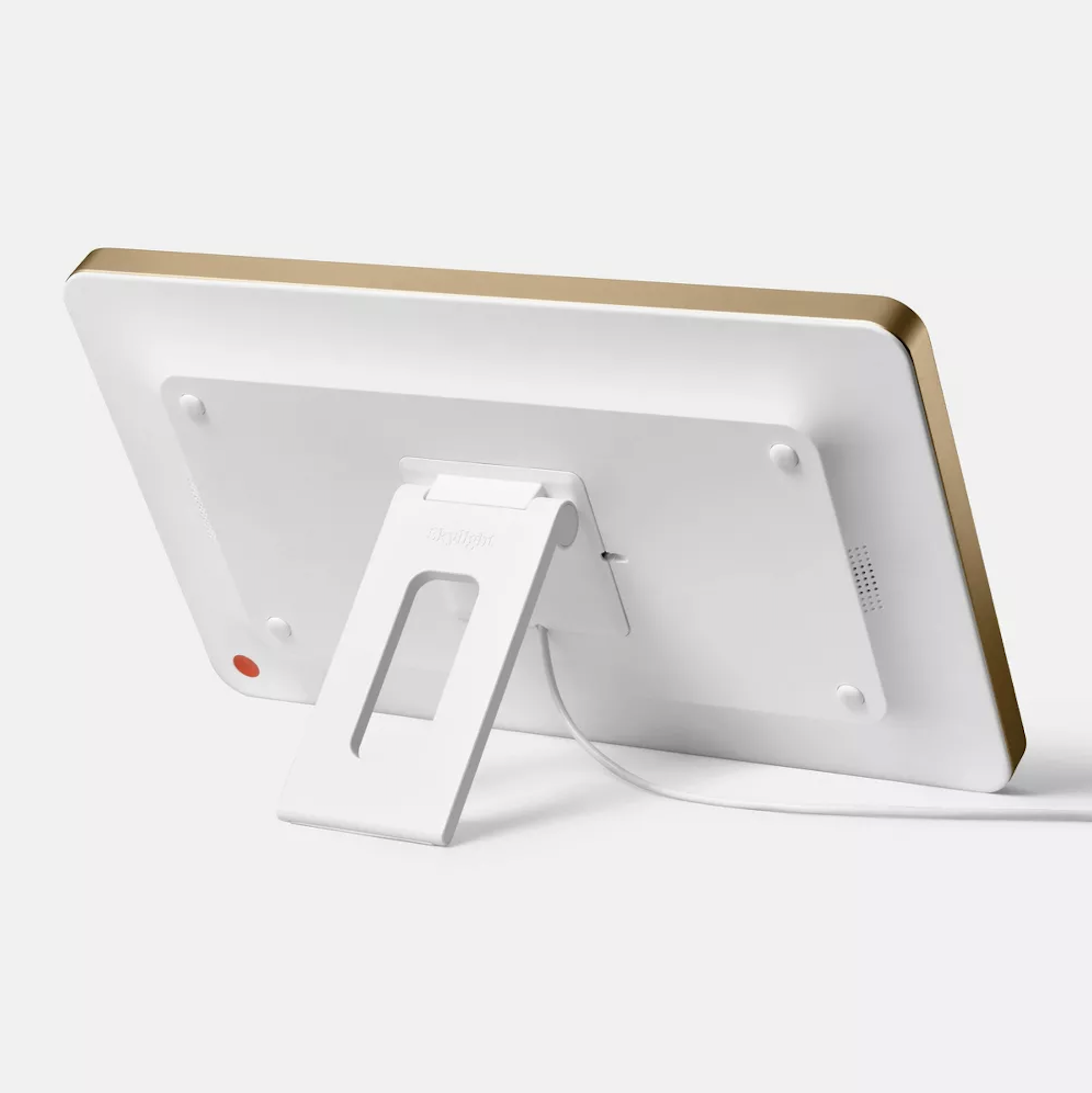
Mounting was an either/or. Desk and wall use each demanded different tradeoffs — the previous design hadn't fully solved for both
The design had no personality. Skylight wanted user-swappable cosmetic frames so people could make the calendar their own
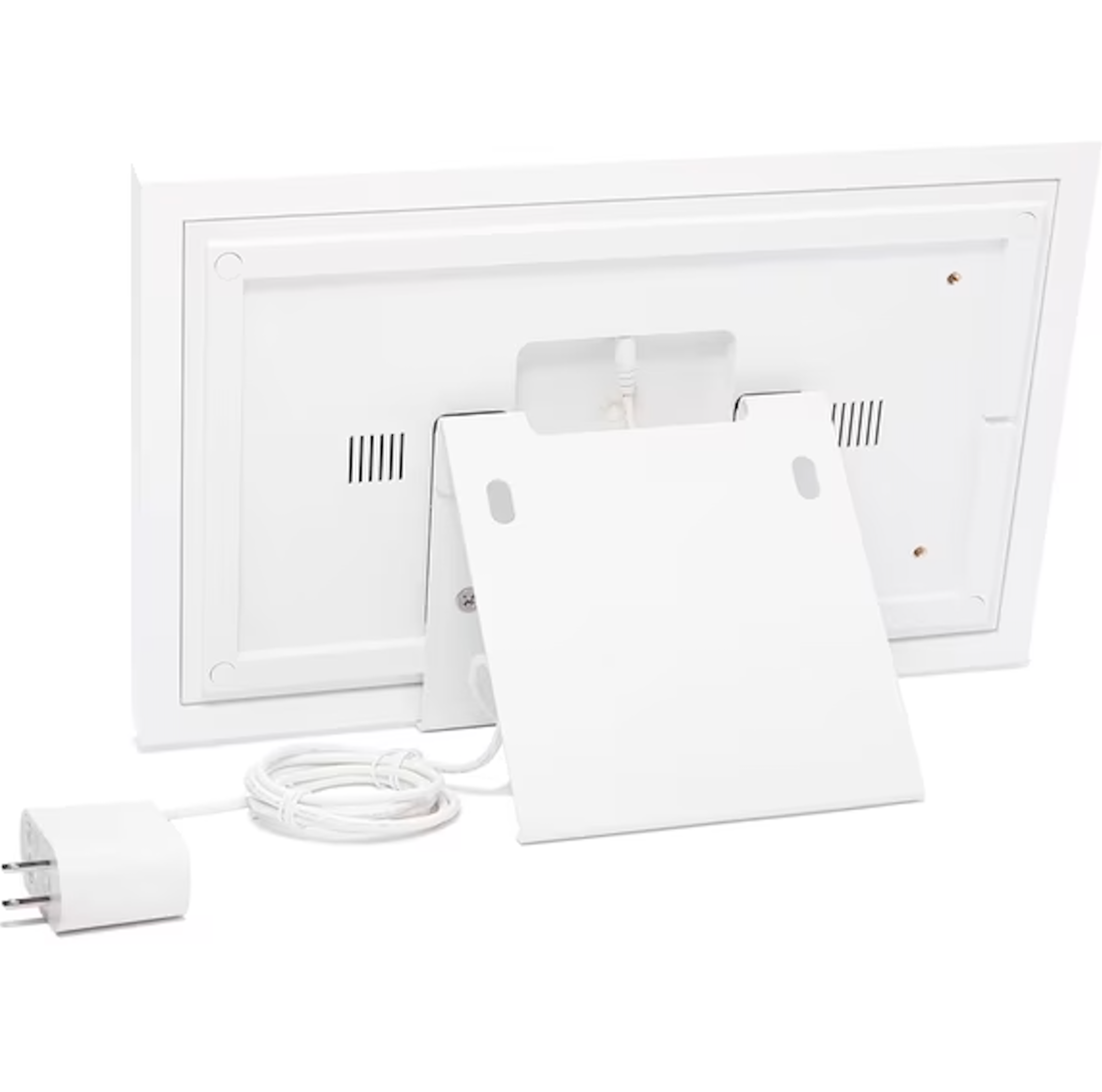
Cable management was an afterthought. Setup meant wrestling a cable into a cramped internal cavity — not the experience Skylight wanted for a device that sits in the middle of a family's kitchen or hallway
Design updates
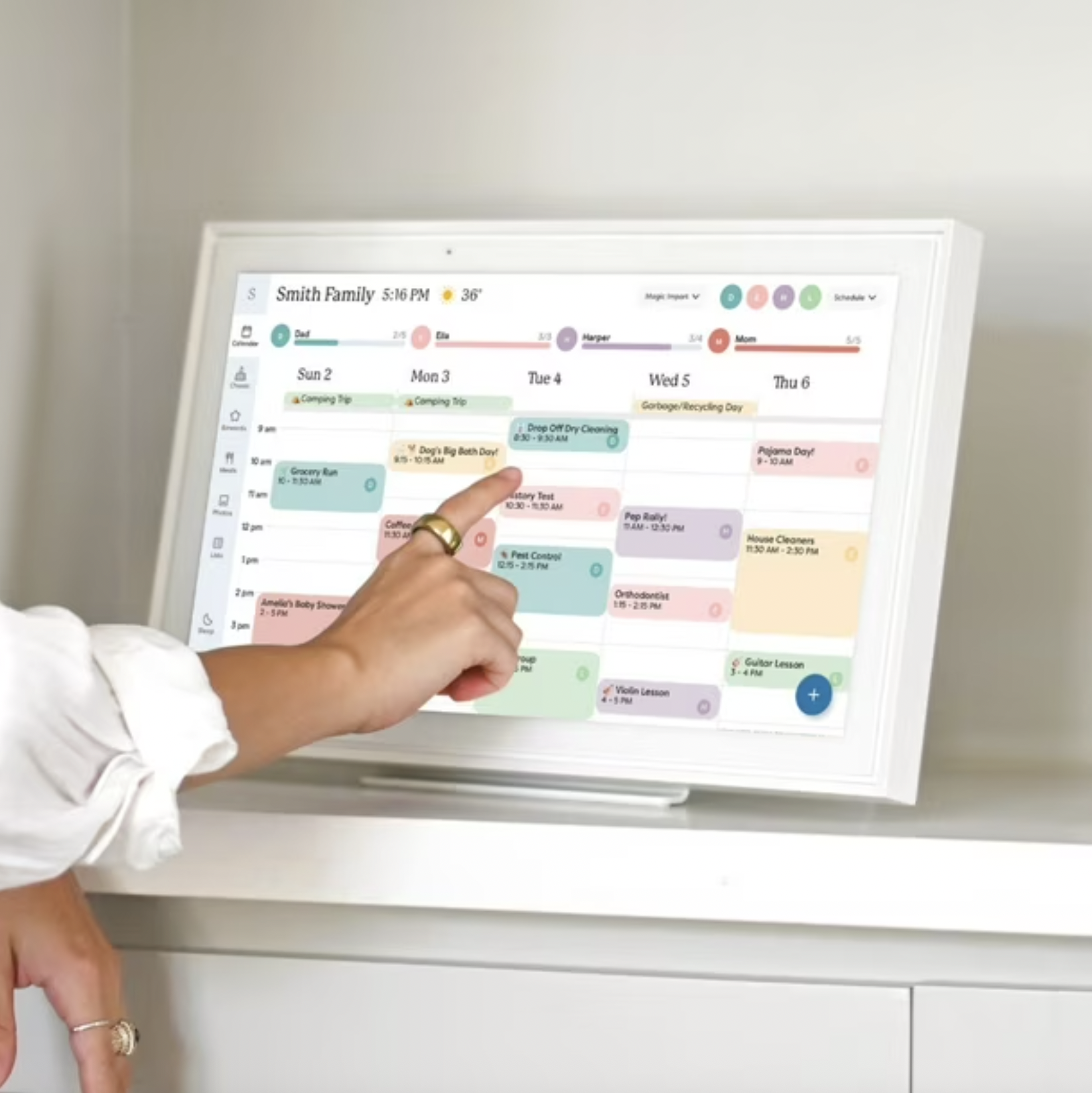
Spanner and n-others didn't start from a single direction — we mapped out the full decision space before committing to one. Early concept work weighed hard-edge, soft, and hybrid design languages side by side, and tested each against real usage questions: what viewing angles matter, how the stand should articulate, whether the wall mount and desk stand should share hardware or stay independent.
One data point reshaped the design early on: only 6% of users were using the outgoing 15" Calendar in portrait mode. That single number let both teams simplify the backplate, cable routing, and mounting hardware around landscape-first use — and skip an entire mode's worth of engineering complexity that wasn't earning its keep.
From there, the design converged on:
A refined surface language that carries the Calendar Max family's design cues into the smaller footprint
A cable-management solution that lives inside the same cavity as the mounting plates — once we mocked up and tested real cable routing and winding paths, we knew exactly what space the solution needed, and reconciled that against everything else already competing for that cavity
New speaker and microphone placement, refined for acoustics without adding bulk
Four interchangeable cosmetic frame styles, so the finished product ships as one calendar with several personalities
“Calendar 2 is the product we’ve always wanted to build, and Spanner’s partnership made it possible.”
Engineering solutions
Spanner led the full mechanical and electrical engineering effort behind Calendar 2, running point on execution across every subsystem — from concept through CAD handoff — in close coordination with n-others and Skylight's manufacturing partner.
The stand carried the most engineering risk in the whole program. We specified a purpose-selected friction hinge (tuned to 1.5–2 N·m of torque) to give it a full 0°–75° range that holds its position without feeling loose or fighting the user, and carried the design through to a documented assembly sequence for Skylight's manufacturing partner — press-fit the torque inserts, assemble the stand, then capture everything with two machine screws, accounting even for the right-angle screwdriver access the final geometry required
Cable management posed a different kind of constraint. The routing solution had to live inside the same cavity as the mounting plates, with no room to route it anywhere else — we built and tested physical mockups of cable routing and winding paths to establish exactly how much space a workable solution needed, then reconciled that against everything else already competing for that cavity
The four cosmetic frames went through a similar handoff between disciplines. ID drove the redesign — simplifying part count and reducing cost relative to the original Calendar's frame system, and landing on magnets for tool-free swapping — and Spanner's engineering team carried that concept to a manufacturable solution, validating magnet strength and placement for a hold that's secure but still releases easily by hand
Speaker and microphone placement required a similar balancing act. Getting clear sound and reliable pickup out of a smaller enclosure meant reconciling acoustic requirements against molding DFM and assembly constraints — solving for both without adding complexity or cost at the production stage
Manufacturing considerations
Spanner stayed engaged through DFM, working directly with Skylight's manufacturing partner to make sure the design intent held up under real production constraints. That ad-hoc support ran for eight weeks post-handoff, precisely so nothing got lost in the handoff between design and the factory floor.
One issue only surfaced once manufacturing builds began: the hinge/stand interface developed extra play that hadn't shown up during engineering prototyping. We went back into the interface between the hinge, stand, and housing and tightened the fit until it matched the same confident, no-wobble feel the design had validated earlier in the program.
Skylight also flagged a related installation challenge and a possible direction for solving it. We worked with their team to validate the approach and carry it through to execution: a drill-through label for the wall-mount accessory, so customers drilling directly into a wall could install it correctly on the first try — without adding cost or complexity to the assembly.
Program outcomes
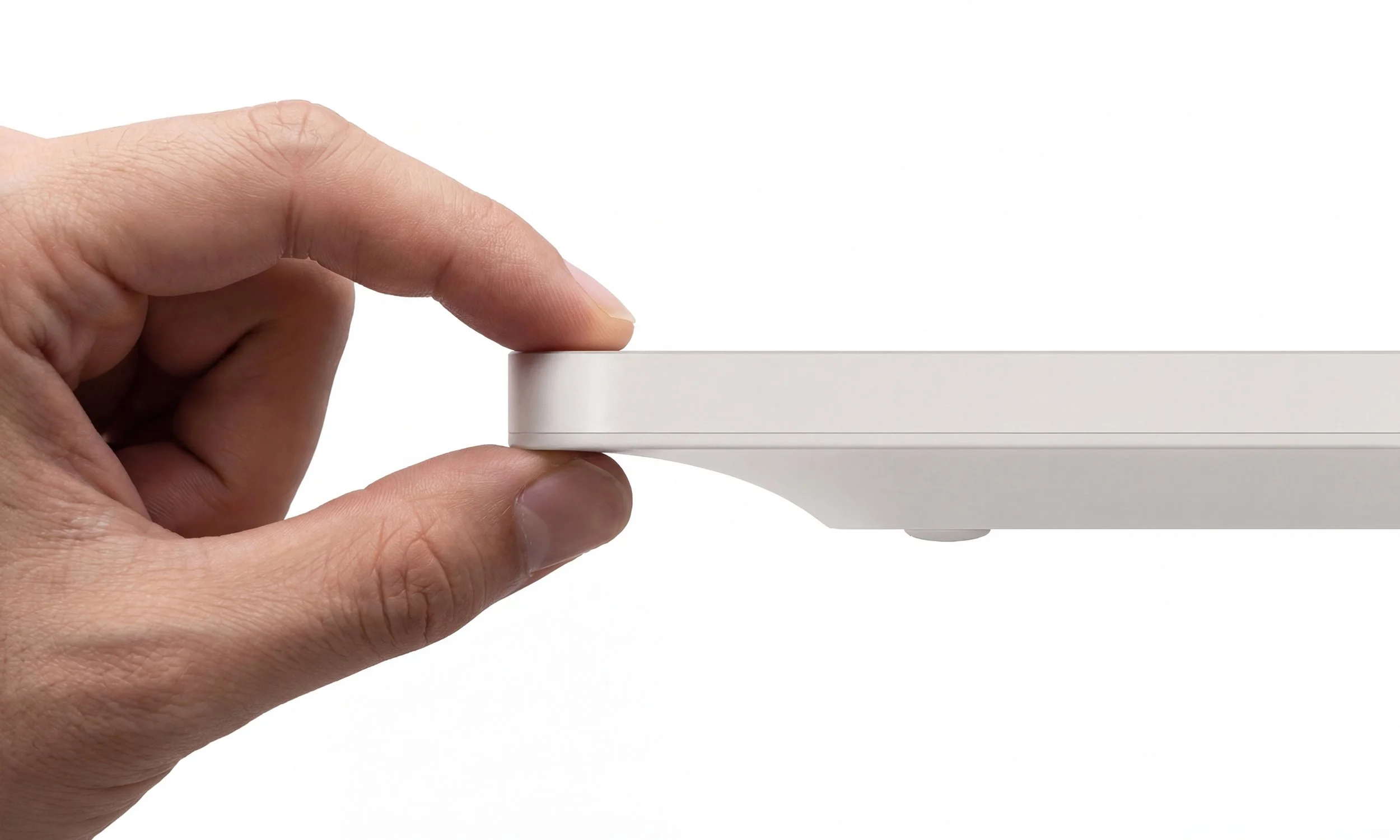
Delivered a slimmer, lighter 15" Calendar aligned to the Calendar Max family
Solved desk and wall mounting in a single, coherent hardware architecture
Shipped four swappable cosmetic frame styles
Redesigned cable management from the ground up, based on real constraints rather than the old approach
Engineered and validated a purpose-built stand hinge for long-term reliability
Calendar 2 launched at CES 2026 as part of Skylight's refreshed Calendar Max lineup, with coverage from TechCrunch on the redesign.
Project team
Skylight: Anubhav Sarkar, Philip Jones
n-others: Ale Sarra, Nicolas Tagliabue, Ignacio Loncon
Spanner: Alyssa Kinoshita, Torence Lu

“Working with the Skylight team was a delight. They have a strong commitment to enhancing the user experience, and no detail was too small to consider. The stand, in particular, was a pain point in the previous design, so we took on the challenge of redesigning not only its look, but also its functionality and ease of use. We wanted users to have a premium experience whether they were mounting the device on a wall or using it on a countertop”
Have a product that's ready for its next generation?
More of Our Work